Different Types of Seat Belt Assemblies
Two-point, three-point, static and retractor formats are not grades of the same product — they are different designs for different problems. This guide sets out what each format is for, how to tell them apart, and where substituting one for another causes trouble.
 Formats
A recurring conversation in our working week runs roughly like this. A customer needs a belt for a particular position, we ask what format it is, and the answer is a description of the belt they have been offered rather than of the position they are fitting it to. The two are not the same thing, and the gap between them is where most restraint supply problems originate.
Seat belt assemblies come in a small number of distinct formats. They are easy to distinguish once you know what you are looking at, and they are not substitutable on availability. This guide covers the formats you will actually meet, what each is designed to do, and how to identify which one a position was built around.
What counts as an assembly
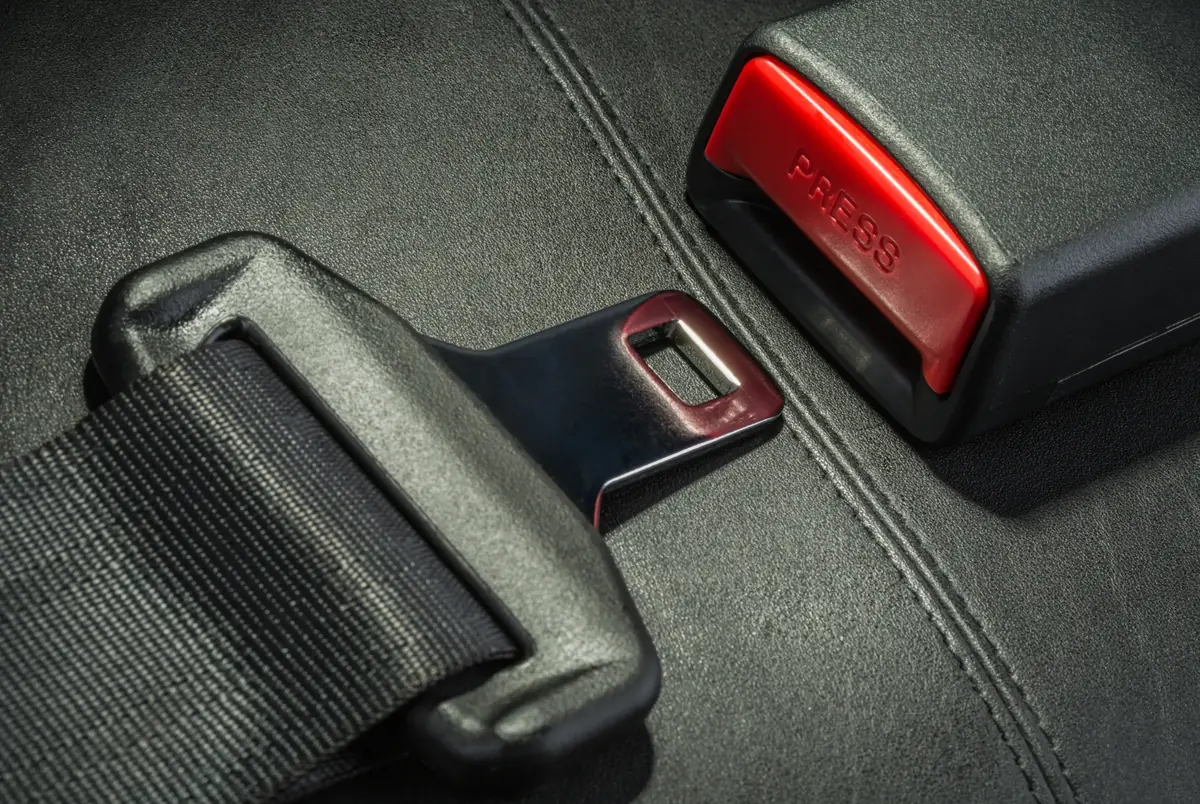
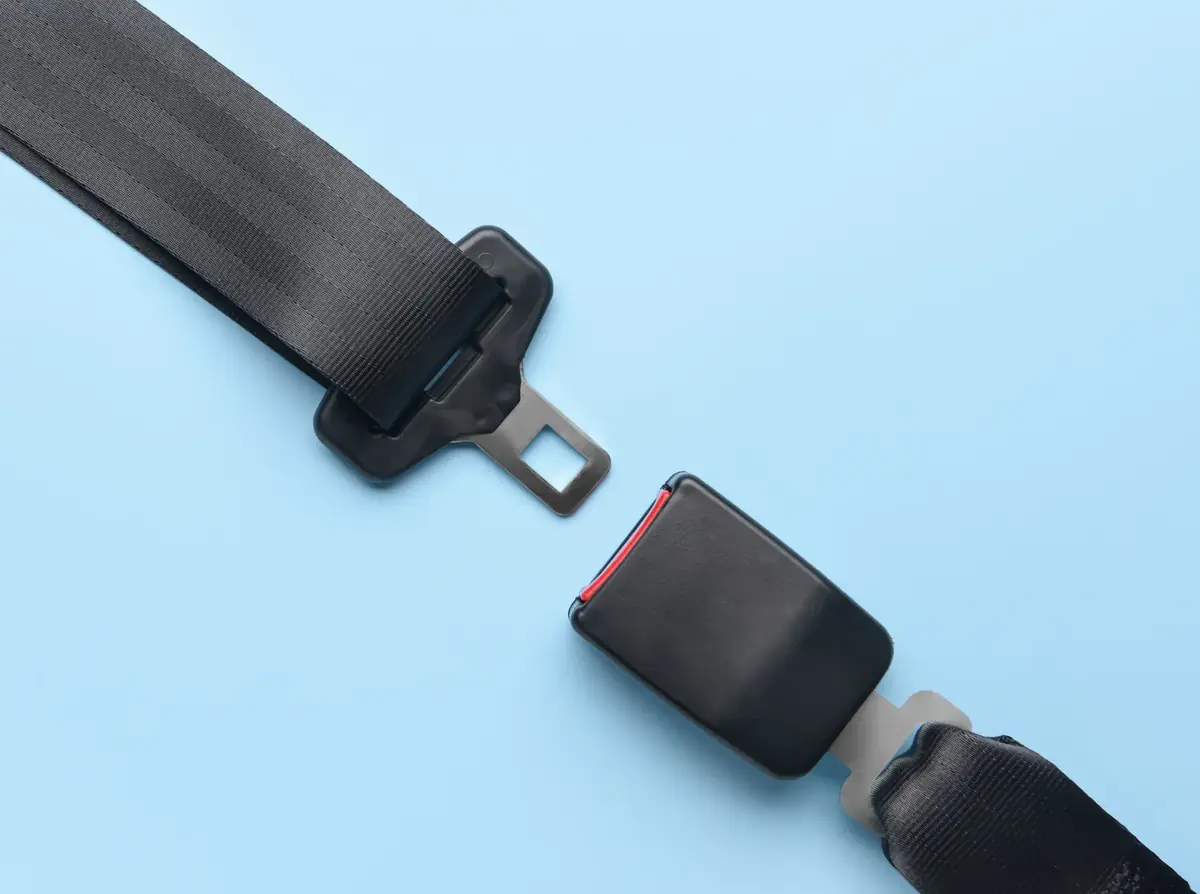
An assembly is the matched group of parts that serves one seat position, sold and fitted as a single item. At minimum it comprises the webbing, the latch tongue running on it, the buckle and stalk the tongue engages, and the anchor hardware fixing everything to the seat or structure. Where the format uses one, the retractor is part of the same set.
The value of buying the set rather than the pieces is that the tongue and buckle arrive designed for each other. By a considerable margin, the most frequent problem we encounter in restraint repair work is a tongue and buckle that do not properly belong together. They click. They hold under a hand pull. But the engagement is not what either part intended and the release behaviour can be inconsistent. Supplying them as a matched pair eliminates that entire class of problem.
The formats you will actually encounter
Two-point static lap belt
Webbing running across the occupant’s hips, anchored at two points, with a fixed length adjusted manually by pulling the free end through a buckle or adjuster. No retractor, no automatic take-up. It is the simplest restraint format in service and, precisely because it is simple, it has the fewest failure modes and needs the least maintenance.
You will find these in industrial and operator seating, in some centre-rear positions, and in specialised applications where the occupant does not need to move far while belted. It is not an obsolete format — in the right position it is the correct answer.
Two-point retractor lap belt
The same lap-only restraint but fed from a retractor, so webbing takes up automatically and the belt does not need manual adjustment. Used where lap restraint is what the position calls for but automatic take-up is wanted, often for convenience in high-cycle use.
Three-point lap and diagonal
The format most people picture. One continuous strap runs from an anchorage at hip level, diagonally across the torso to an upper anchorage, and back down to a retractor, with a sliding tongue that engages a buckle on the opposite side. Three anchorage points, three load paths, and webbing that distributes between the lap and diagonal sections through the sliding tongue.
This is near-universal at outer positions in road vehicles, front and rear, and increasingly common at centre-rear positions where the vehicle structure supports the necessary upper anchorage.
Multi-point arrangements
Additional straps converging on a central buckle, typically over both shoulders and across the hips. Found in specialised and purpose-built seating rather than in ordinary road vehicles. These are specified individually against the seat and the application rather than selected from a general range.
Identifying which format a position uses
Working out what a position was designed around is usually straightforward if you look at the anchorages rather than at the belt.
- Count the mounting points. Two fixings mean a two-point format. Three mean a three-point format. This is the single most decisive observation and it takes seconds.
- Locate them. Two points at hip level either side indicates a lap belt. Two at hip level plus one at shoulder height indicates lap and diagonal.
- Establish what they attach to. Seat frame or vehicle structure. A seat-mounted assembly moves with the seat; a structure-mounted one does not, and the webbing lengths differ accordingly.
- Look for a retractor. Usually near the lower or upper anchorage, sometimes concealed behind trim. Its presence or absence, and its mounting plane, are both worth recording.
- Check the tongue. A tongue that slides freely on the webbing indicates a three-point arrangement. A fixed tongue indicates a two-point one.
If you are photographing this for us, those five observations — plus a shot of the buckle and stalk — are almost always enough for us to identify the format.
Where substitution causes problems
The temptation to fit what is available rather than what is specified is understandable, particularly when a vehicle is waiting. These are the substitutions that cause real trouble.
| Substitution | What goes wrong |
|---|---|
| Two-point fitted where three-point was designed | The position has anchorage geometry assuming three load paths, and the upper anchorage is left unused. This changes what the position does and is not a decision to take on availability grounds. |
| Three-point fitted where only two anchorages exist | There is nowhere correct for the upper anchorage. Improvising a mounting point is not a workshop-level decision — it is a structural one. |
| Retractor format fitted in place of static | Requires establishing a mounting plane and angle that did not previously exist, which is the part of a retrofit most often got wrong. |
| Automatic-locking retractor where emergency-locking was designed | The belt ratchets progressively tighter as the occupant moves. Uncomfortable, and a clear sign the wrong mode has been supplied. |
| Mismatched tongue and buckle | Engagement may feel adequate but is not what either part was designed for, and release behaviour can be inconsistent. |
| Seat-mounted assembly used on structure anchorages | Webbing lengths and geometry assume the belt moves with the seat. Fitted to fixed points, the travel is wrong throughout the seat’s range. |
Where a vehicle or equipment manufacturer specifies particular restraint parts or procedures for a position, that guidance should be followed. If you are unsure whether a substitution is acceptable, ask before fitting rather than after.
Specifying an assembly with no original to copy
Body building, seat manufacture and some rebuild work create positions that have never had a belt. There is nothing to match, so the specification is built up from the arrangement outward.
- Anchorage layout first. How many points, where they sit, and what they attach to. Everything else follows from this.
- Seat-mounted or structure-mounted. This determines whether the belt travels with the seat, and changes the webbing lengths required.
- Retractor or static. Driven by how much the occupant needs to move while belted, not by which is more sophisticated.
- Webbing lengths. Measured at the seat’s most demanding settings, with routing losses included.
- Hardware interface. Bolt thread and length, stalk length, tongue profile, buckle type, and mounting orientation for any retractor.
Our guide on selecting seat belt components covers the measurement side of this in more detail, and the seat belt assemblies page sets out what we can supply as a matched set.
Frequently asked
They are designed for different situations, and the correct format for a position is determined by how that position was designed rather than by a general ranking. Three-point arrangements restrain both the pelvis and the upper body; two-point lap belts restrain the pelvis. Many industrial and operator seating positions use two-point belts entirely appropriately. Follow the vehicle or equipment manufacturer’s design for the position in question.
Not as a straightforward parts swap. A three-point arrangement needs a third anchorage at shoulder height, and creating one where the design did not provide it is a structural question rather than a workshop one. If a position was built for two anchorages, adding a load-bearing mounting point should not be improvised. Consult the vehicle or equipment manufacturer before considering it.
Chiefly because the tongue and buckle arrive matched to each other, which removes the commonest cause of problems in restraint repair. It also means one part number to order, one item to check in, one interface to verify, and one specification to record for future replacement. For workshops and fleets handling several vehicles a week, that consistency is usually worth more than the small saving on components.
Move the seat through its range and watch the anchorages. If the mounting points travel with the seat, it is seat-mounted; if they stay fixed while the seat moves, it is structure-mounted. This distinction changes the webbing lengths the assembly needs, so it is worth establishing before ordering rather than after.
Frequently not. Left and right positions are often mirror images with different webbing lengths, different stalk lengths and different retractor mounting arrangements. Always specify which side you are fitting. It is a detail that costs nothing to state and a great deal to get wrong.
A note on scope
This is general explanatory material, written from working familiarity with seat belt products. It is not a repair procedure for any specific vehicle or machine. Requirements vary by vehicle and application, and users should consult relevant manufacturer guidance for their own equipment. Anything you are unsure about should be referred to a competent technician who can examine the system directly.
Related articles
 Fundamentals
What Is a Seat Belt System and How Does It Work?
Every part in the chain, what each one does, and how they behave together during normal use and sudden deceleration.
Read Article Mechanism
Understanding Seat Belt Retractors
Spool, spring and locking mechanism — why a belt pays out smoothly but grabs when tugged, and what ALR and ELR mean in practice.
Read Article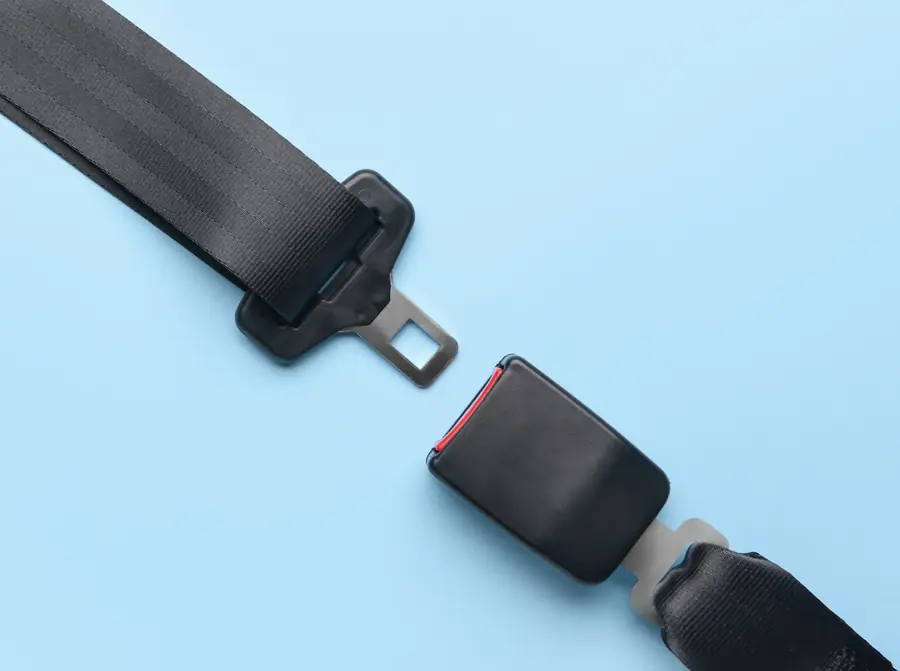 Selection
Factors to Consider When Selecting Seat Belt Components
The measurements and answers that decide whether a part fits — and the assumptions that most often cause a belt to arrive wrong.
Read ArticleSpecifying an assembly from scratch?
Send us the anchorage layout, whether the mounting is on the seat or the structure, and how much belt travel the position needs. We will build the specification with you.